
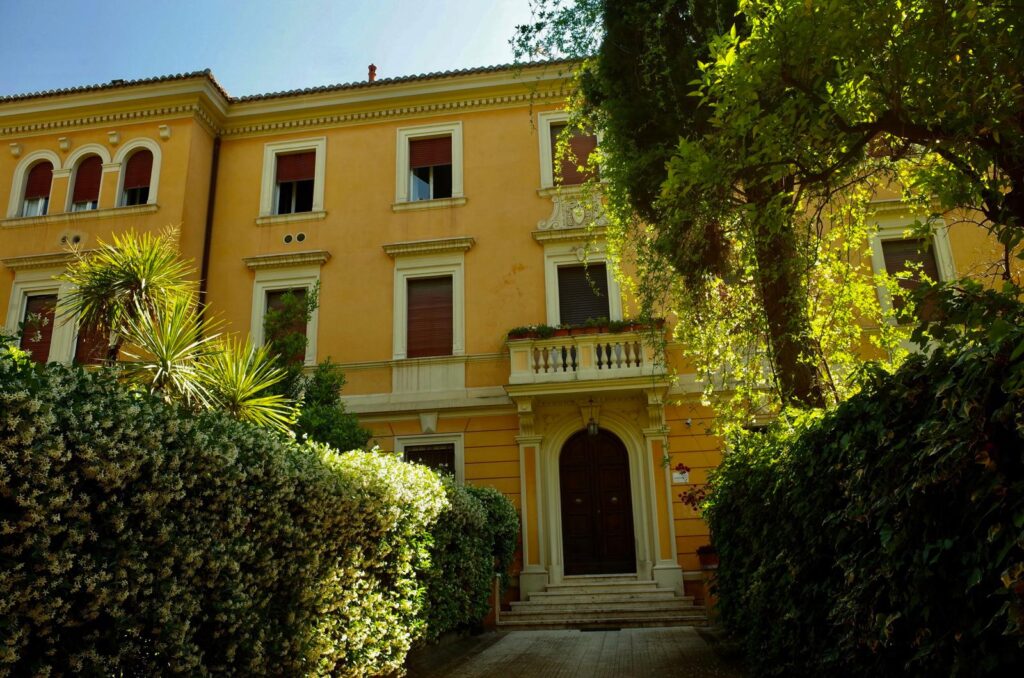
As a Roman, I’ve always believed that Rome can’t be fully understood all at once.
There are places that reveal themselves immediately, and others you have to conquer patiently. San Saba is one of these. A discreet, intimate district where the Eternal City takes off its tourist mask and shows its most private face. Walking here means stepping into a suspended world, where time slows down and the soul can breathe.
A district with deep roots
San Saba takes its name from the Basilica dedicated to the saint, built in the 7th century atop an ancient monastery. Eastern monks fleeing persecution found refuge here, and for centuries the area has maintained a spiritual and reserved vocation.
In the 20th century, the neighborhood became home to one of the first examples of “garden village” social housing, with low houses, internal gardens, and a rare architectural harmony in Rome.
Even today, walking through these streets, you experience a dimension almost outside of time, filled with silence, greenery, and small details.

What to see in San Saba
- Basilica of San Saba
It’s not a famous church, and that’s precisely what makes it so captivating. You step inside and are struck by the quiet, the faded frescoes emerging from the walls like faded memories, the sense of ancientness that doesn’t need to show off. - The Baths of Caracalla
More than just an archaeological site, they’re a gigantic stone ghost. Wandering among its arches and the remains of its vaults feels like brushing against the skin of Imperial Rome, still perceiving its grandeur and distant echoes. - Via di San Saba and Piazza Gian Lorenzo Bernini
Here, elegance isn’t flashy: modest buildings, flower-lined paths, hidden courtyards. It’s a place that speaks of community, of lives flowing slowly, of neighbors chatting in the shade of the pines. - The Aurelian Walls and Porta San Paolo
Walking alongside these walls means touching the resilience of the city: ancient stones that have witnessed wars, empires, revolutions — and that still stand, silently watching over the neighborhood. - The Museum of the Via Ostiense and the Pyramid of Cestius
A corner of Rome that feels almost surreal, where an Egyptian pyramid rises between Roman walls and railway tracks. A meeting of eras that leaves you speechless, perfect for those who love the city’s poetic contradictions. - The Orange Garden (Parco Savello)
It’s not just a scenic overlook — it’s a place of the soul. People come here not only to admire Rome from above but to feel its suspended magic: the scent of orange trees, the silence broken only by the wind, couples whispering softly.

Curiosities
- The district is famous for its historic urban gardens, where even today some families grow fruit and vegetables right in the heart of the city.
- The neighborhood was never hit by bombings during World War II, which has allowed it to preserve its original urban layout intact.
Why staying in San Saba is perfect for experiencing Rome
San Saba is the ideal base for those who want to immerse themselves in the real Rome, far from the tourist circuits, yet within walking distance of everything. The neighborhood offers:
- Tranquility and authenticity: quiet streets, tree-lined squares, a refined residential atmosphere that lets you live Rome like a Roman, not like a tourist.
- Strategic location: within walking distance to the Circus Maximus, the Colosseum, the Baths of Caracalla, the Orange Garden, Testaccio, Trastevere, Campo de’ Fiori, Piazza Venezia.
- Safety and comfort: it’s one of the safest and most well-kept neighborhoods in the city, ideal for families, couples, or solo travelers.
- Discreet beauty: those who stay here enjoy unique views, romantic strolls, and corners you won’t find in the guidebooks. It’s the perfect place for those seeking a refined experience, far from the crowds, yet steeped in history.
- Connection with nature: parks, gardens, urban orchards, and tree-lined avenues make San Saba a place where you can breathe, even on the busiest days.
San Saba is an invitation.
An invitation to slow down, to listen, to observe. It’s the Rome that makes no noise but leaves its mark. If you’re ready to discover it, it won’t disappoint you.
Photo credits: Silvia Valdambrini

